What Does PPC Stand For & Why Should You Care?
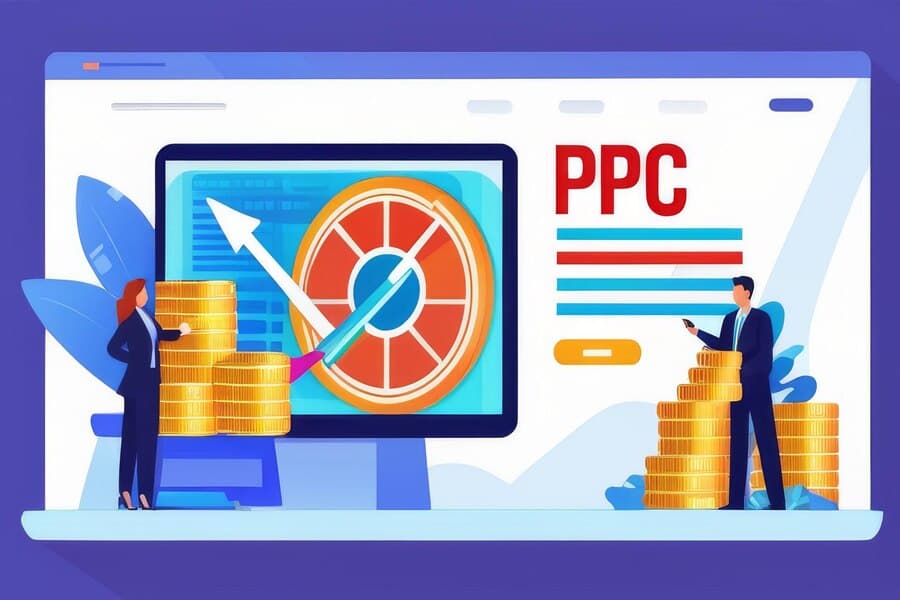
If you have spent any time researching digital marketing, you have almost certainly encountered the acronym PPC — in agency proposals, marketing blogs, Google’s own documentation, and conversations with consultants who throw the term around as though everyone already knows what it means. So what does PPC stand for, and why does it matter so much in modern digital marketing? PPC stands for Pay-Per-Click — a model of digital advertising where businesses pay a fee each time a user clicks on one of their ads. Rather than paying a flat rate for ad space regardless of performance, PPC ties your spending directly to user action, making it one of the most accountable and measurable advertising models ever developed. Understanding what PPC stands for in marketing is the first step toward understanding why it has become a foundational component of digital strategy for businesses of every size — from solo entrepreneurs running their first Google Ads campaign to global enterprises spending millions per month across multiple platforms. This guide explains everything: how PPC works mechanically, why it delivers results that other channels struggle to match, the strategies that separate profitable campaigns from wasted budget, and how partnering with the right PPC agency in India can transform your advertising ROI.
What Does PPC Stand For in Marketing?
PPC stands for Pay-Per-Click — but understanding what PPC stands for in marketing requires going beyond the literal definition of the acronym to understand the model it describes and why that model represents a fundamental shift from traditional advertising economics. In traditional advertising — print, television, radio, outdoor — businesses pay for exposure regardless of whether anyone responds to the ad. You pay for the billboard whether ten thousand people drive past it or ten thousand people ignore it. You pay for the television spot whether viewers engage with it or mute it and leave the room. The exposure itself is the product being purchased, and the commercial outcome is entirely uncertain. PPC inverts this model. You pay only when a user takes a specific action — clicking your ad — which means your budget is consumed only by genuine expressions of interest rather than passive exposure. Every pound or rupee you spend on PPC represents a user who saw your ad, found it relevant enough to click, and arrived at your website as a result. This accountability is what makes PPC stand for something far more significant than just an advertising format in digital marketing — it represents a fundamentally more efficient relationship between advertising spend and commercial outcome.
How Does PPC Advertising Work?
PPC advertising operates through an auction-based system that runs in real time, every time a user performs a search or loads a page where ads can be displayed. Understanding how this system works is essential for anyone looking to use PPC effectively — or to evaluate whether the agency managing their campaigns is doing so competently.
The PPC Auction Mechanism
When a user types a query into Google, an automated auction takes place in milliseconds. Every advertiser who has bid on keywords matching that query enters the auction. Google evaluates each advertiser’s bid amount, Quality Score — a composite measure of ad relevance, expected click-through rate, and landing page experience — and the likely impact of ad extensions to calculate each advertiser’s Ad Rank. The advertiser with the highest Ad Rank wins the top position, but critically, the amount they pay is not their maximum bid — it is determined by the Ad Rank of the advertiser below them divided by their own Quality Score, plus one cent. This means that an advertiser with a highly relevant, well-optimized ad can achieve a higher position than a competitor with a larger bid but lower Quality Score — and pay less per click in the process. This mechanic is why professional campaign management delivers dramatically better results than self-managed campaigns that focus only on bid amounts without addressing the quality signals that determine actual cost and placement.
PPC Platform Ecosystem
Google Ads is the dominant PPC platform globally, capturing the majority of search advertising spend due to Google’s overwhelming market share in search. Google Search Ads place your business at the top of results pages for high-intent queries — users who are actively searching for what you offer. Google Display Ads extend your reach across Google’s publisher network of over two million websites, apps, and YouTube properties. Microsoft Ads — formerly Bing Ads — offers a complementary search advertising channel that reaches a distinct audience segment, often at lower cost-per-click than Google due to reduced competition. Social media PPC platforms — primarily Facebook and Instagram Ads, LinkedIn Ads for B2B, and YouTube Ads — operate on interest-based and behavioral targeting rather than search intent, allowing businesses to reach audiences based on who they are rather than what they are searching for at a specific moment. Each platform serves a different role in the customer journey, and the most effective PPC strategies deploy budget across multiple platforms strategically rather than concentrating everything on a single channel.
Why PPC Matters: The Core Benefits of Pay-Per-Click Advertising
Now that you understand what PPC stands for and how the mechanics work, the natural question is why businesses invest so heavily in it. The answer lies in a combination of benefits that no other digital marketing channel delivers as completely or as immediately.
Immediate Traffic and Revenue Generation
The most practically significant advantage of PPC for most businesses is speed. From campaign launch to live ads receiving traffic can be a matter of hours. For businesses launching a new product, running a time-sensitive promotion, entering a new market, or simply needing leads now rather than in six months, PPC delivers results on a timeline that no organic channel can match. SEO — the most common alternative — typically requires three to six months of consistent investment before meaningful organic traffic begins to materialize. PPC campaigns can generate qualified leads on day one. This immediacy makes PPC not just a standalone channel but the critical short-term engine in an integrated strategy where SEO builds long-term organic authority while PPC generates immediate pipeline. BizBox Story’s Google and Facebook Ads service is built around exactly this integrated model — with paid campaigns engineered to generate immediate results while organic strategies compound in the background.
Precision Targeting That Eliminates Wasted Spend
PPC advertising offers a level of audience targeting precision that traditional advertising cannot approach. On Google Search, you reach users at the exact moment they express intent to find what you offer — the targeting is defined by the user’s own behavior rather than demographic assumptions. On social PPC platforms, you can layer demographic, interest, behavioral, geographic, device, and remarketing parameters to reach precisely defined audience segments with messaging tailored to their specific profile. This precision dramatically reduces wasted impressions — the exposure that costs money but never had a realistic chance of converting. For businesses in competitive markets where every marketing dollar must be justified, PPC’s targeting capabilities are a fundamental advantage over broader awareness channels.
Complete Budget Control and Spend Transparency
PPC gives businesses complete control over their advertising expenditure in a way that no other paid channel matches. You set daily and monthly budget caps that the platform will never exceed. You can pause campaigns instantly if business conditions change, scale spending up when performance is strong, and allocate budget across campaigns, ad groups, and keywords based on real performance data. This control is particularly valuable for small and medium-sized businesses that cannot afford the unpredictability of traditional advertising budgets. You always know exactly how much you have spent, exactly what that spending produced in terms of clicks and conversions, and exactly what your cost per acquisition is — enabling rational, data-driven decisions about whether to increase or reduce investment.
Measurable Results Connected Directly to Revenue
What PPC stands for in marketing ultimately comes down to measurability. Every element of a PPC campaign is trackable — impressions, clicks, click-through rates, conversion rates, cost per click, cost per acquisition, and return on ad spend. When properly connected to conversion tracking and revenue attribution systems, PPC provides a direct line of sight from advertising spend to business outcome that most other channels cannot match. This measurability enables continuous optimization — identifying which keywords, ads, audiences, and landing pages deliver the strongest returns and reallocating budget accordingly — creating a compounding improvement in campaign efficiency over time.
Core PPC Strategies That Maximize Advertising ROI
Understanding what PPC stands for is the starting point. Understanding how to run PPC campaigns profitably is the substance. The following strategies form the foundation of high-performing PPC programs across every platform and industry.
Keyword Research: The Foundation of Search PPC
Effective keyword research for PPC is both a science and an art. The science involves using tools like Google Keyword Planner, Ahrefs, and SEMrush to identify search volume, competition levels, and cost-per-click estimates for relevant terms. The art involves understanding search intent — recognizing which keywords signal genuine purchase intent versus informational browsing, and bidding aggressively on the former while managing costs carefully on the latter. Long-tail keywords — specific, multi-word phrases like “best PPC agency in India for e-commerce” rather than simply “PPC agency” — typically deliver lower cost-per-click and higher conversion rates because they attract users with more specific, more advanced intent. Negative keywords — terms you explicitly exclude from triggering your ads — are equally important, preventing your budget from being consumed by irrelevant searches that will never convert. A rigorously maintained negative keyword list is one of the highest-ROI optimizations available in any PPC account and one of the clearest indicators of whether an agency is managing your campaigns actively or passively.
Ad Copy Optimization: Winning the Click
Your ad copy is the first direct interaction a potential customer has with your brand in a PPC context, and its quality determines both your click-through rate and your Quality Score — which in turn affects your ad position and cost per click. Compelling PPC ad copy acknowledges the searcher’s specific intent in the headline, communicates your most relevant value proposition clearly, differentiates you from the competitors appearing in adjacent positions, and includes a clear, specific call to action that tells the user exactly what happens when they click. A/B testing different headline combinations, description variants, and CTA formulations is a continuous process in well-managed PPC accounts. The performance difference between a well-crafted ad and an average one — in terms of click-through rate and conversion rate — is typically far larger than the difference that additional bid spend can deliver.
Landing Page Optimization: Converting Clicks into Customers
Every click your PPC campaign generates costs money, which means every visitor who arrives on your landing page and leaves without converting represents direct waste. Landing page optimization — ensuring that the page a user lands on after clicking your ad is maximally effective at converting that visitor into a lead or customer — is therefore one of the highest-ROI investments in any PPC program. An effective PPC landing page maintains message match with the ad that generated the click, presents a single clear value proposition without the distractions of full website navigation, loads in under three seconds on mobile and desktop, and features a prominent, frictionless conversion path. BizBox Story’s website design service builds conversion-optimized landing pages specifically designed for PPC traffic — pages that improve Quality Scores, reduce cost per click, and convert at materially higher rates than standard website pages used as PPC destinations.
Bid Management: Staying Competitive Without Overspending
PPC bid management has evolved significantly with the introduction of automated and smart bidding strategies by Google and Meta. Manual bidding — setting specific bid amounts for individual keywords — gives maximum control but requires significant time investment to maintain effectively. Automated bidding strategies — Target CPA, Target ROAS, Maximize Conversions, Enhanced CPC — use machine learning to optimize bids in real time based on conversion probability signals that manual bidders cannot process at the same speed or scale. The appropriate bidding strategy depends on campaign maturity, conversion volume, and specific business objectives. New campaigns with limited conversion history typically perform better with manual or enhanced CPC bidding until sufficient data has accumulated for automated strategies to optimize effectively. Mature campaigns with strong conversion history benefit significantly from Target CPA or Target ROAS bidding — particularly when managed within the guardrails that a professional agency establishes to prevent automated strategies from optimizing toward the wrong outcomes.
Remarketing: Re-Engaging Your Warmest Audiences
Remarketing — showing targeted ads to users who have previously visited your website but did not convert — is consistently one of the highest-performing tactics in any PPC program because it reaches audiences who have already demonstrated interest in your brand. A user who visited your pricing page but did not submit an inquiry is far more likely to convert from a remarketing ad than a cold audience member seeing your brand for the first time. Remarketing campaigns can be segmented by the specific pages a user visited, the depth of engagement they showed, how recently they visited, and whether they are existing customers — enabling highly personalized messaging that speaks directly to where each user is in their relationship with your brand. Dynamic remarketing — automatically generating ads featuring the specific products or services a user viewed — is particularly powerful for e-commerce businesses where the product-level personalization it enables dramatically increases conversion rates.
The Role of a PPC Agency in India
Managing PPC campaigns profitably — across multiple platforms, with continuous optimization, rigorous testing, and transparent reporting — is a full-time, specialist undertaking. Most businesses that attempt to manage their own PPC campaigns either underinvest in the optimization work required to improve performance over time or overspend on inefficient campaigns that consume budget without generating proportional revenue. A professional PPC agency in India brings platform expertise, cross-industry experience, dedicated management time, and sophisticated tooling to your campaigns — typically delivering substantially better results than self-managed campaigns while freeing your team to focus on the business itself.
Local Market Knowledge with Global Campaign Capability
A PPC agency in India with genuine expertise understands both the nuances of Indian consumer behavior and search patterns and the mechanics of running effective campaigns for international markets — US, UK, Australia, and beyond. This dual capability is particularly valuable for Indian businesses targeting global markets and for international businesses running campaigns in India. Market-specific keyword research, culturally relevant ad copy, appropriate bidding strategies for each market’s competitive dynamics, and time-zone-aware campaign scheduling all require the local knowledge that only a genuinely experienced agency provides.
Proven Track Record Demonstrated Through Real Results
When evaluating any PPC agency in India, the most important criterion is documented results — not claimed expertise, not impressive client logos, but verifiable case studies that demonstrate the agency’s ability to generate measurable revenue from paid advertising campaigns. Ask for specific examples of campaigns in your industry or at your budget level, with clear metrics: what was the cost per acquisition before and after the agency’s involvement, what ROAS was achieved, how did conversion rates improve over the engagement. BizBox Story’s case studies demonstrate exactly this kind of documented commercial impact — with specific revenue figures, traffic outcomes, and timeline benchmarks that give prospective clients a realistic picture of what professional PPC management delivers.
Transparent Reporting That Connects Spend to Revenue
One of the most common complaints about PPC agencies is opacity — receiving reports full of impressions and click data without any clear connection to business outcomes. A professional PPC agency provides reporting that answers the questions that actually matter to business owners: how many leads did we generate, what did each lead cost, how many of those leads converted to customers, what was the total revenue attributable to PPC, and what was our return on ad spend. This transparency is non-negotiable. If an agency cannot clearly explain what your PPC investment is producing in terms of revenue, that is not a reporting limitation — it is a performance one. BizBox Story’s reporting framework connects every campaign metric directly to business outcomes, giving clients complete visibility into the commercial return on their advertising investment.
Integrated PPC and SEO Strategy
The businesses achieving the strongest digital marketing results in 2026 are not running PPC and SEO as separate, siloed programs — they are running them as an integrated growth system where each channel informs and amplifies the other. PPC data reveals which keywords convert at the highest rates — intelligence that directly informs SEO content strategy. SEO organic rankings reduce dependence on paid traffic for high-volume keywords — allowing PPC budget to be concentrated on high-intent terms where paid placement delivers the strongest incremental value. Combined, the two channels create a presence on search results pages that is far more powerful than either can deliver independently. BizBox Story’s SEO services and paid advertising programs are designed to work together as a unified growth engine — sharing data, aligning keyword strategy, and creating the kind of dominant search presence that compounds in value over time.
Common PPC Myths Debunked
PPC Is Only Viable for Large Businesses with Big Budgets
This is one of the most persistent and most damaging misconceptions about what PPC stands for in marketing. PPC is inherently scalable — campaigns can be run effectively at any budget level, with daily spend as low as a few hundred rupees. Small and medium-sized businesses often achieve stronger PPC returns than large competitors because their campaigns can be more tightly focused, their landing pages more specifically relevant, and their conversion processes more personal. The key is not budget size — it is budget efficiency, which professional management delivers regardless of absolute spend level.
Once Set Up, PPC Campaigns Run Themselves
PPC campaigns that are set up and left unattended consistently deteriorate in performance over time. Search behavior changes, competitors adjust their bids and creative, Quality Scores drift, and landing page performance fluctuates — all of which require ongoing monitoring and response. A campaign that performed well in its first month without active management will typically show significantly worse results by month three. Continuous optimization — keyword expansion, negative keyword refinement, bid adjustments, ad copy testing, and landing page improvements — is what drives compounding improvement in PPC performance, not the initial setup.
Higher Bids Always Mean Better Results
Ad position in Google Ads is determined by Ad Rank — a combination of bid amount and Quality Score. An advertiser with a higher Quality Score can achieve a better position than a higher-bidding competitor while paying less per click. This means that investing in ad relevance, landing page quality, and expected click-through rate improvement often delivers better ROI than simply increasing bids — and is why professional campaign management consistently outperforms self-managed campaigns that focus on bid levels without addressing the quality signals that determine actual cost and position.
How to Get Started with PPC Advertising
Getting started with PPC effectively requires a structured approach that sets campaigns up for long-term success rather than rushing to launch and optimizing reactively.
Define Specific, Measurable Campaign Goals
Before any keyword research, platform selection, or ad creation, define precisely what you want your PPC campaigns to achieve. Specific, measurable goals — generate 50 qualified leads per month at a maximum cost of ₹800 per lead, achieve a 400% return on ad spend for e-commerce campaigns, generate 200 trial sign-ups per month for a SaaS product — give your campaigns and your agency a clear optimization target and make performance evaluation objective rather than subjective.
Select Platforms Based on Audience Behavior
Platform selection should be driven by where your target audience demonstrates the behaviors most aligned with your campaign goals. Google Search is the strongest platform for capturing high-intent demand — users who are actively searching for what you offer. Facebook and Instagram are strongest for building awareness and generating demand among audiences who match your ideal customer profile but are not yet actively searching. LinkedIn is strongest for B2B campaigns targeting specific professional roles, industries, or company sizes. A well-constructed PPC strategy typically deploys budget across multiple platforms with distinct roles — search for intent capture, social for demand generation, and remarketing across both for re-engagement.
Build Conversion Tracking Before Launching
Launching PPC campaigns without conversion tracking in place is one of the most common and most costly mistakes businesses make. Without conversion tracking, you cannot determine which keywords, ads, or audiences are generating leads or revenue — making optimization impossible and budget allocation arbitrary. Ensure that Google Ads conversion tracking, Google Analytics 4 goals, and any platform-specific pixels are fully installed, verified, and tested before your first campaign goes live.
Monitor, Test, and Optimize Continuously
PPC is not a set-and-forget channel. The businesses achieving the strongest PPC results are those that treat their campaigns as living systems that require continuous attention — weekly performance reviews, regular A/B tests of ad creative and landing pages, ongoing keyword expansion and negative keyword refinement, and monthly strategic reviews that evaluate whether the overall campaign structure still aligns with business objectives. If you are ready to launch or improve your PPC campaigns with the support of a professional team that understands both the technical mechanics and the strategic context of effective pay-per-click advertising, book a free strategy call with BizBox Story to get a clear assessment of your current situation and a realistic picture of what professional PPC management can deliver for your business.
Frequently Asked Questions
What does PPC stand for?
PPC stands for Pay-Per-Click — a digital advertising model where advertisers pay a fee each time a user clicks on their ad. Rather than paying for ad space regardless of performance, PPC ties spending directly to user action, making it one of the most accountable and measurable advertising models available.
What does PPC stand for in marketing specifically?
In marketing, PPC stands for Pay-Per-Click advertising — a performance-based model used across search engines, social media platforms, and display networks to drive targeted traffic to websites, generate leads, and produce direct sales. PPC in marketing is distinguished from other paid channels by its direct connection between spend and measurable user action.
How is PPC different from SEO?
PPC delivers immediate, paid traffic through ads that appear at the top of search results and across digital platforms. SEO builds organic rankings over time through content quality, technical optimization, and link authority — without per-click costs but with a longer timeline to results. The most effective digital marketing strategies use both channels together — PPC for immediate pipeline generation and SEO for long-term organic asset building.
How much should I budget for PPC advertising in India?
PPC budgets in India vary significantly by industry, competition level, and campaign objectives. A local service business might run effective campaigns from ₹15,000 per month in ad spend, while competitive national campaigns in finance, real estate, or e-commerce typically require ₹50,000 to ₹2,00,000 or more monthly. A professional PPC agency in India will assess your specific market and objectives to recommend an appropriate starting budget with realistic performance expectations.
How do I measure the success of a PPC campaign?
The most important PPC success metrics are conversion rate (the percentage of clicks that complete a desired action), cost per acquisition (the total cost to generate one lead or customer), return on ad spend (revenue generated per rupee of ad spend), and click-through rate (the percentage of impressions that generate a click). Vanity metrics like impressions and total clicks are secondary — the metrics that connect PPC spend to business outcomes are what matter.
Why should I hire a PPC agency in India instead of managing campaigns myself?
Professional PPC agency management delivers better results than self-management for most businesses because it brings platform expertise, cross-industry optimization experience, dedicated management time, access to advanced bidding and analytics tools, and continuous testing and refinement that self-managed campaigns rarely achieve. The cost of agency management is typically recovered many times over in improved campaign efficiency and revenue generation.
About Shay Mehta
Founder, CEO & Author, BizBox Story
Shay Mehta is the Founder & CEO of BizBox Story, a digital marketing agency built specifically for US businesses operating in restricted, underserved, and hard-to-market niches — cannabis dispensaries, pest control companies, chiropractic practices, and home services. Under Shay's leadership, BizBox Story's delivery team has taken clients from page three to page one of Google in as little as 60 days, and helped dispensary clients generate $45,000+ in monthly organic revenue with triple-digit traffic growth.
Shay's path into marketing runs through nearly two decades inside the US and Indian financial services industry. Having lived in the United States for 18 years and completed his education at the University of Massachusetts, Shay went on to hold senior leadership roles at two of the largest names in life insurance: serving as National Head at Max New York Life and later as Director at MetLife India. That career — built on disciplined strategy, large-scale client relationships, and navigating heavily regulated markets — gives Shay a rare vantage point on what it actually takes for a business to earn trust and visibility in the US, especially in categories where traditional advertising doors are closed.
Today, Shay channels that experience into building BizBox Story's proof-first, no-lock-in approach to SEO and digital marketing. Shay is also the voice behind @sayitlikeshay, a rapidly growing Instagram account with 50,000+ followers and an exceptionally high engagement rate, where he shares direct, unfiltered takes on current affairs, marketing and sales.