Best Practices for AI Chatbots & Conversational Marketing
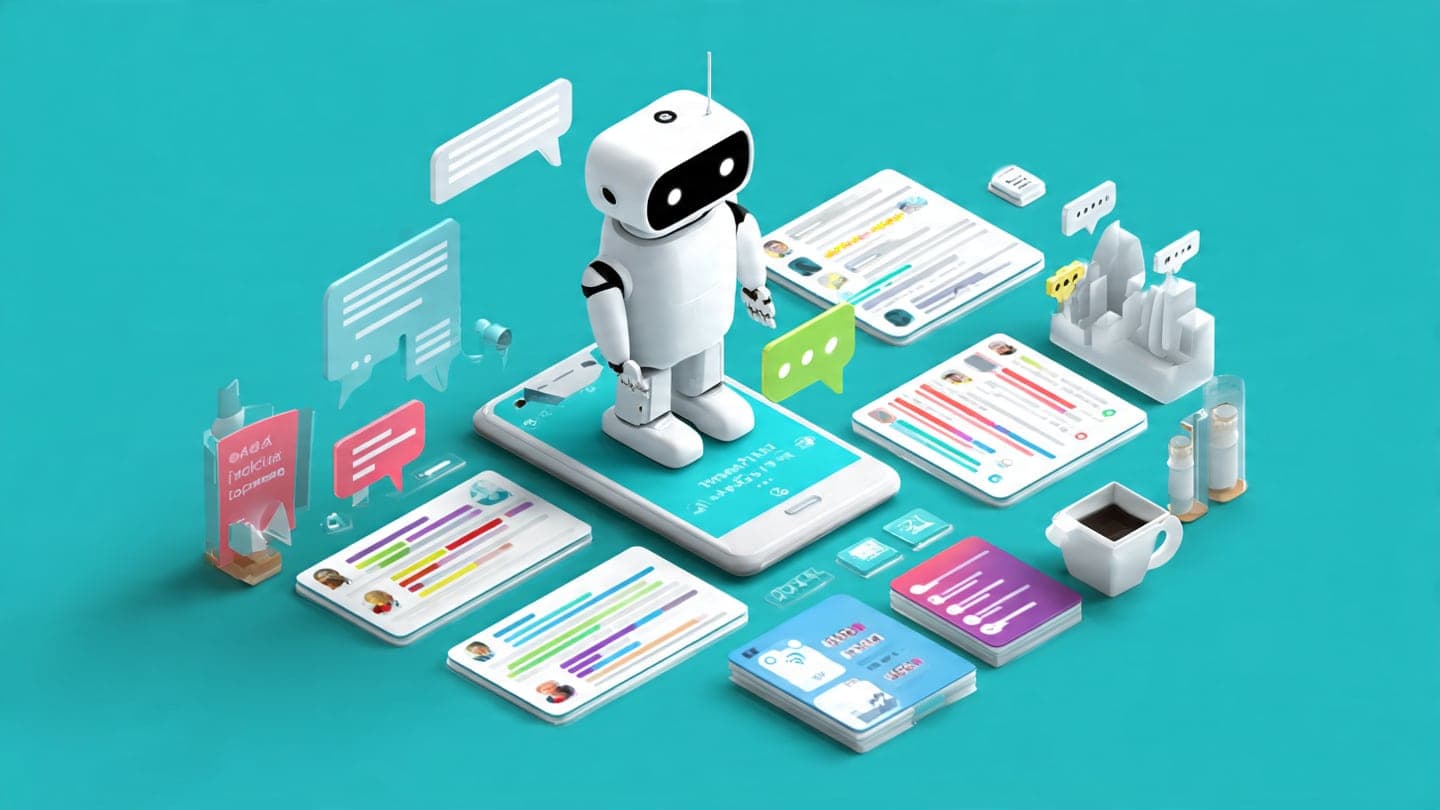

AI chatbots have evolved from a cool feature to a critical business asset. They are now your front desk, sales team, and support rep—often serving as the primary embodiment of your brand’s personality. In 2026, customers will leave at the first sign of a slow or robotic experience.
This guide breaks down the essential strategies to build chatbots that turn conversations into genuine conversions while covering the best practices in chatbot building and conversational AI best practices that modern businesses must follow.
Why Conversational AI is a Marketing Must-Have
Modern customers expect instant, frictionless service. They want answers immediately, without searching through countless web pages. AI chatbots make this possible 24/7.
From answering FAQs to qualifying leads, they remove barriers and create a seamless customer experience.
Businesses investing in conversational AI best practices are seeing stronger engagement, better retention, and improved lead generation across every digital channel.
If you’re already improving your online visibility, you should also explore how search visibility works with conversational experiences by reading this guide:
https://bizboxstory.com/a-complete-guide-to-add-yourself-to-google-search-2026/
The Tangible Business Benefits
Businesses using conversational marketing consistently report:
- Higher Conversion Rates
- Shorter Sales Cycles
- Improved Customer Retention
- Reduced Support Workload
The ROI is so compelling that leading digital marketing agencies integrate AI chatbots early in their client strategies.
What Are the Best Practices in Chatbot Building?
Many businesses ask: what are the best practices in chatbot building?
The answer lies in creating a chatbot experience that feels natural, intelligent, fast, and helpful. The best practices for chatbot building focus on customer behavior, personalization, conversational flow, and continuous learning.
Below are the most effective strategies businesses should implement.
1. Craft a Human, Not Robotic, Tone
People prefer to talk to a personality, not a program. Even when they know it’s AI, the conversation must feel natural.
Avoid robotic scripts.
Instead of:
“Welcome. How may I assist you with your inquiry?”
Try:
“Hey! What can I help you with today?”
This understanding of audience tone is why many brands partner with specialists to get it right.
2. Map Flows to the Customer Journey
A strategic chatbot feels intuitive; a random one feels chaotic.
Before building, map out key customer journey stages.
Your chatbot flows should address:
- Awareness-stage questions
- Evaluation and comparison queries
- Purchase intent signals
- Post-purchase support needs
This data can also be used to refine performance marketing and ad targeting.
Businesses struggling with poor campaign performance often face broader strategy problems. You can learn more here:
https://bizboxstory.com/diy-seo-failed-how-to-hire-the-right-seo-ads-agency-that-gets-time-zones-right-3-must-ask-questions
3. Personalize Every Interaction
Customers want to feel seen and recognized.
Simple personalization can drastically increase engagement.
Your chatbot should adapt using:
- Past interaction history
- User location and behavior
- Previous purchases
- Returning visitor data
A simple “Welcome back!” can make all the difference.
4. Seamlessly Blend AI with Human Support
AI isn’t here to replace your team; it’s here to handle repetitive tasks while humans solve complex problems.
Let the chatbot handle:
- Frequently Asked Questions (FAQs)
- Appointment booking
- Lead qualification
- Basic troubleshooting
Escalate to humans for:
- High-value sales
- Complex support issues
- Escalated complaints
This hybrid model delivers the most efficient and satisfying experience.
5. Train Your Bot with Real Conversations
The most effective AI learns from actual customer interactions.
Continuously feed it real dialogue data to improve its accuracy and relevance.
Top agencies often run monthly training loops to ensure the chatbot evolves with customer behavior and industry trends.
This is one of the most important conversational AI best practices businesses overlook.
6. Capture Leads with Conversation, Not Forms
Static forms are a major source of lead leakage.
Chatbots fix this by making information collection feel like a natural dialogue.
Instead of a long form with multiple fields, the chatbot asks one simple question at a time.
This creates a smoother user experience and significantly improves lead conversions.
7. Embrace Multilingual Capabilities
In diverse markets, a single-language bot is no longer enough.
To serve a wider audience, multilingual support is essential.
Benefits of multilingual chatbot support include:
Better Local Reach
Users feel more comfortable communicating in their native language.
Higher Engagement
Localized communication improves trust and interaction rates.
Stronger SEO Signals
Regional language optimization can improve local search visibility.
For businesses managing local customer interactions, location-based features also matter. Read more here:
https://bizboxstory.com/what-is-google-map-live-location-and-how-to-use-it
8. Optimize for Search Intent
People chat the way they search.
Integrating search-intent keywords into chatbot flows can significantly improve SEO performance.
Include common user queries related to:
- Pricing
- Service availability
- Product comparisons
- Location-based searches
- Delivery timelines
This helps build topical authority and aligns your chatbot with real search behavior.
The best practices for chatbot building always include SEO alignment because conversational search is becoming increasingly important in 2026.
9. Integrate with CRM and Analytics
A chatbot without analytics is operating blind.
Integration allows businesses to improve customer journeys continuously.
Track critical metrics like:
- User drop-off points
- Most frequently asked questions
- Lead quality
- Conversion triggers
- Customer satisfaction scores
This data helps optimize messaging and improve retention over time.
By the Numbers: The Impact of AI Chatbots
| Metric | Current Value | YoY Change |
|---|---|---|
| Average Response Time | 1.2 seconds | +18% Faster |
| Lead Conversion via Chatbots | 28% | +6% |
| Customer Satisfaction | 89% | +9% |
| Cost Reduction in Support | 32% | +14% |
| Chatbot Adoption Among SMBs | 41% | +11% |
Case Study: From Static Form to Conversational Powerhouse
A retail brand in the NCR region transformed its lead generation by replacing a static form with a conversational AI assistant.
The chatbot asked simple, friendly questions like:
“What are you looking for today?”
The system automatically qualified and assigned leads directly to sales reps via CRM integration.
The Result
- 34% increase in qualified leads
- Faster response times
- Better customer engagement
- Improved sales productivity
This demonstrates the raw power of strategic conversational marketing.
How a Professional Agency Elevates Your Chatbot
Partnering with an expert digital marketing agency can transform your chatbot from a basic tool into a revenue-generating asset.
Agencies typically provide:
- Chatbot strategy and flow creation
- Ongoing AI training
- CRM integration
- Analytics optimization
- SEO-focused conversational design
- Customer journey mapping
Agencies build chatbots that don’t just chat—they convert.
Frequently Asked Questions (FAQ)
Q1: Are AI chatbots expensive to implement?
Not necessarily. Most platforms offer scalable pricing models based on business size and usage requirements.
Q2: Can AI chatbots completely replace human support?
No. AI works best when combined with human support teams for complex, emotional, or high-value interactions.
Q3: Do chatbots improve website SEO?
Yes. Chatbots improve engagement metrics, reduce bounce rates, and align content with search intent, which can positively impact SEO.
Q4: What’s the biggest mistake brands make with chatbots?
Over-automation. Users should always have an easy option to speak with a real human.
Q5: Will a chatbot work for a small business?
Absolutely. Small businesses often benefit the most because chatbots reduce workload, improve lead handling, and save operational costs.
Final Thought
AI chatbots are no longer optional—they are the heart of modern customer experience.
By following the best practices in chatbot building and implementing strong conversational AI best practices, businesses can create faster, smarter, and more human digital experiences.
The brands winning in 2026 will be the ones that make conversations effortless, intelligent, and genuinely helpful.
Now is the time to start building smarter conversations.
About Shay Mehta
Founder, CEO & Author, BizBox Story
Shay Mehta is the Founder & CEO of BizBox Story, a digital marketing agency built specifically for US businesses operating in restricted, underserved, and hard-to-market niches — cannabis dispensaries, pest control companies, chiropractic practices, and home services. Under Shay's leadership, BizBox Story's delivery team has taken clients from page three to page one of Google in as little as 60 days, and helped dispensary clients generate $45,000+ in monthly organic revenue with triple-digit traffic growth.
Shay's path into marketing runs through nearly two decades inside the US and Indian financial services industry. Having lived in the United States for 18 years and completed his education at the University of Massachusetts, Shay went on to hold senior leadership roles at two of the largest names in life insurance: serving as National Head at Max New York Life and later as Director at MetLife India. That career — built on disciplined strategy, large-scale client relationships, and navigating heavily regulated markets — gives Shay a rare vantage point on what it actually takes for a business to earn trust and visibility in the US, especially in categories where traditional advertising doors are closed.
Today, Shay channels that experience into building BizBox Story's proof-first, no-lock-in approach to SEO and digital marketing. Shay is also the voice behind @sayitlikeshay, a rapidly growing Instagram account with 50,000+ followers and an exceptionally high engagement rate, where he shares direct, unfiltered takes on current affairs, marketing and sales.